

 Duc Nguyen (Dwight)
AIQuinta joined New Ocean Group at VIMF Binh Duong 2026 to showcase practical AI Agent applications for manufacturing and enterprise operations
Table of Contents
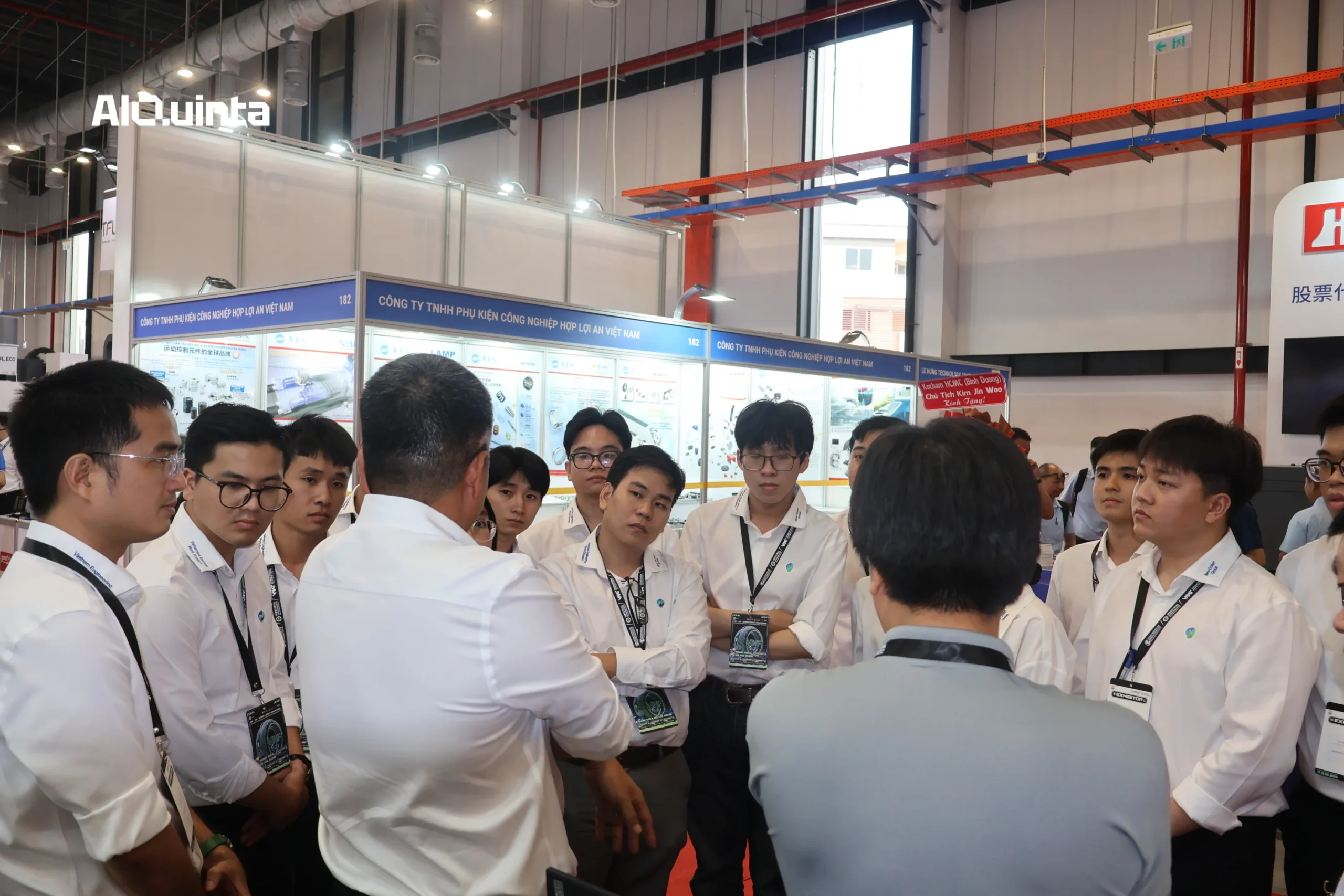
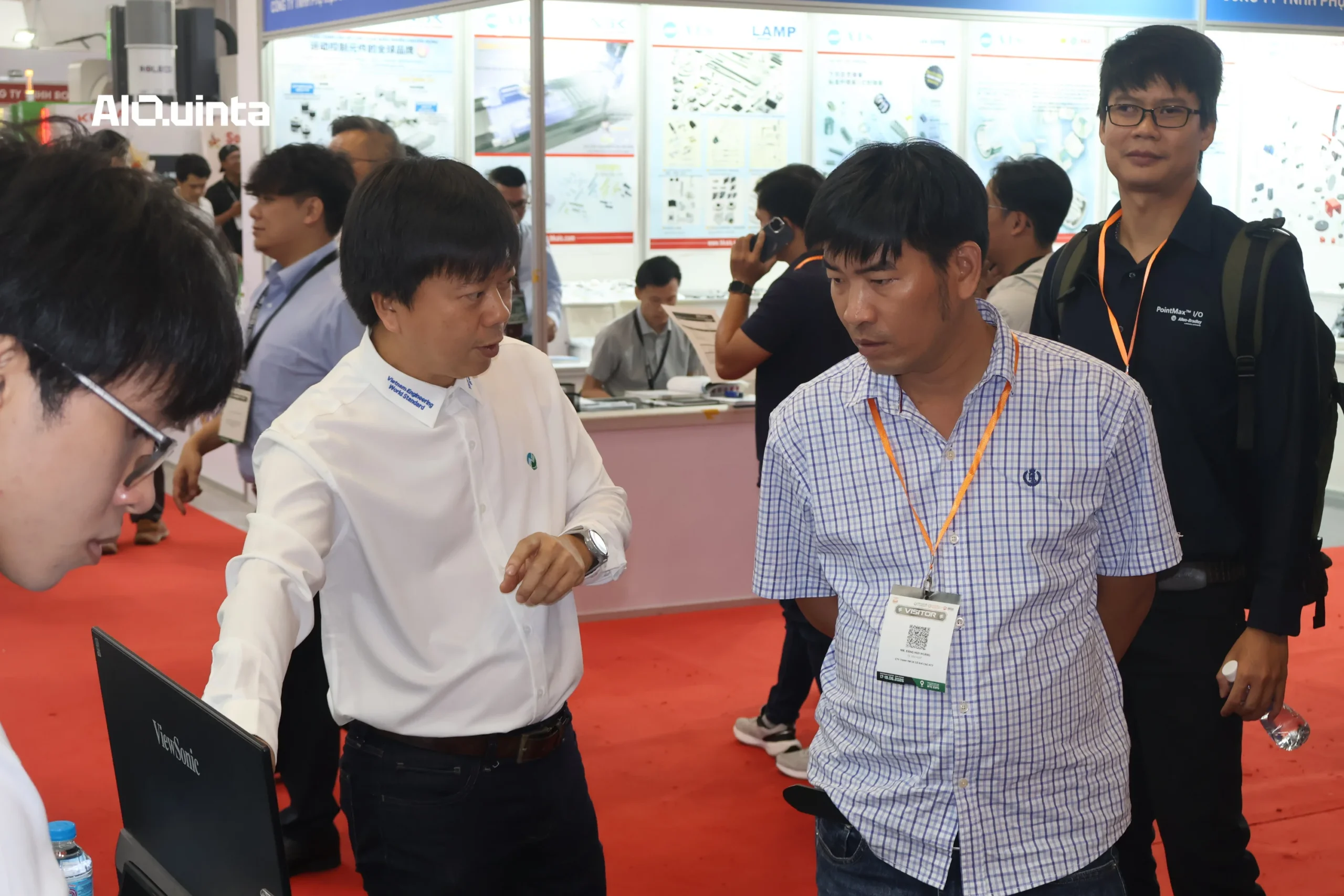
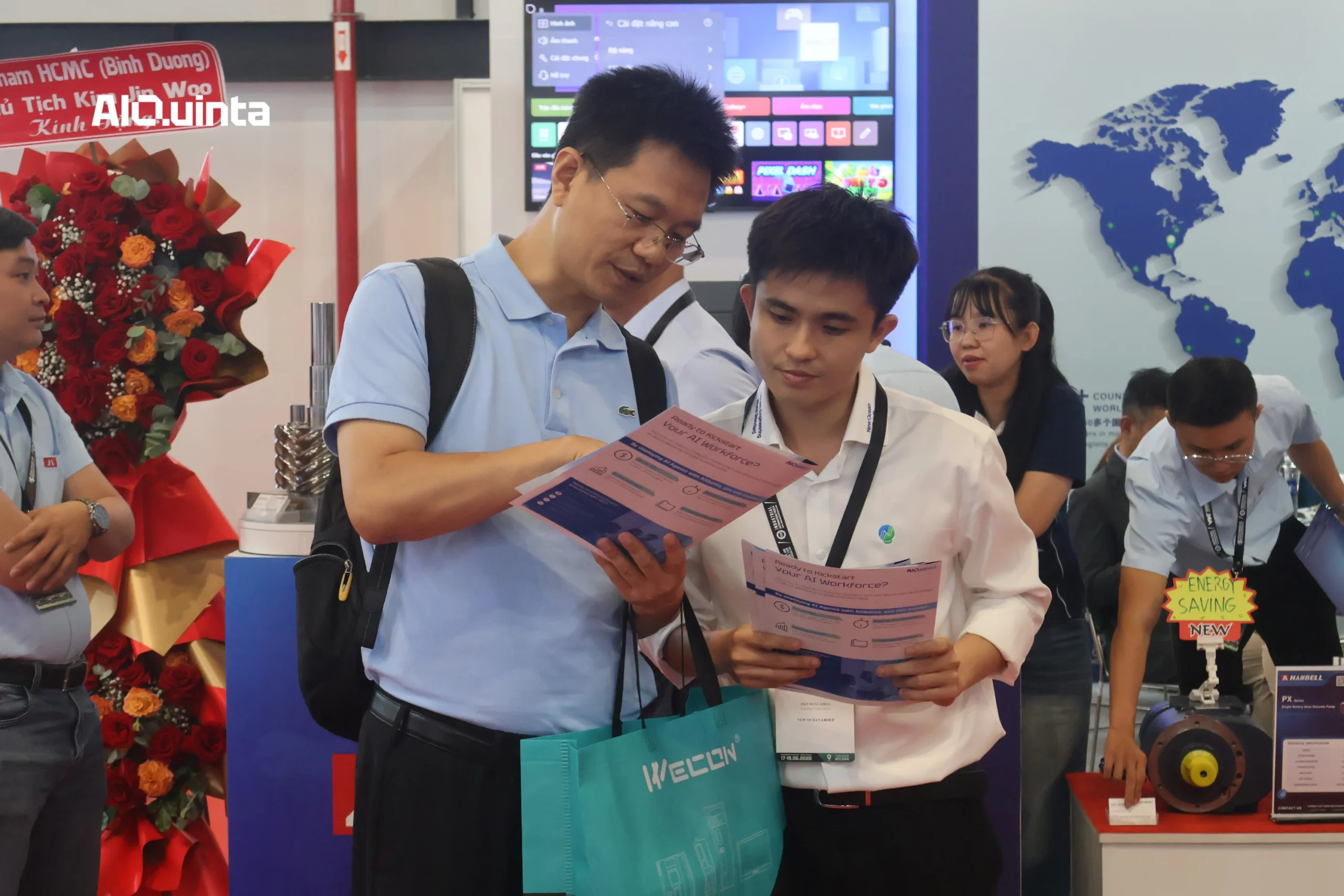
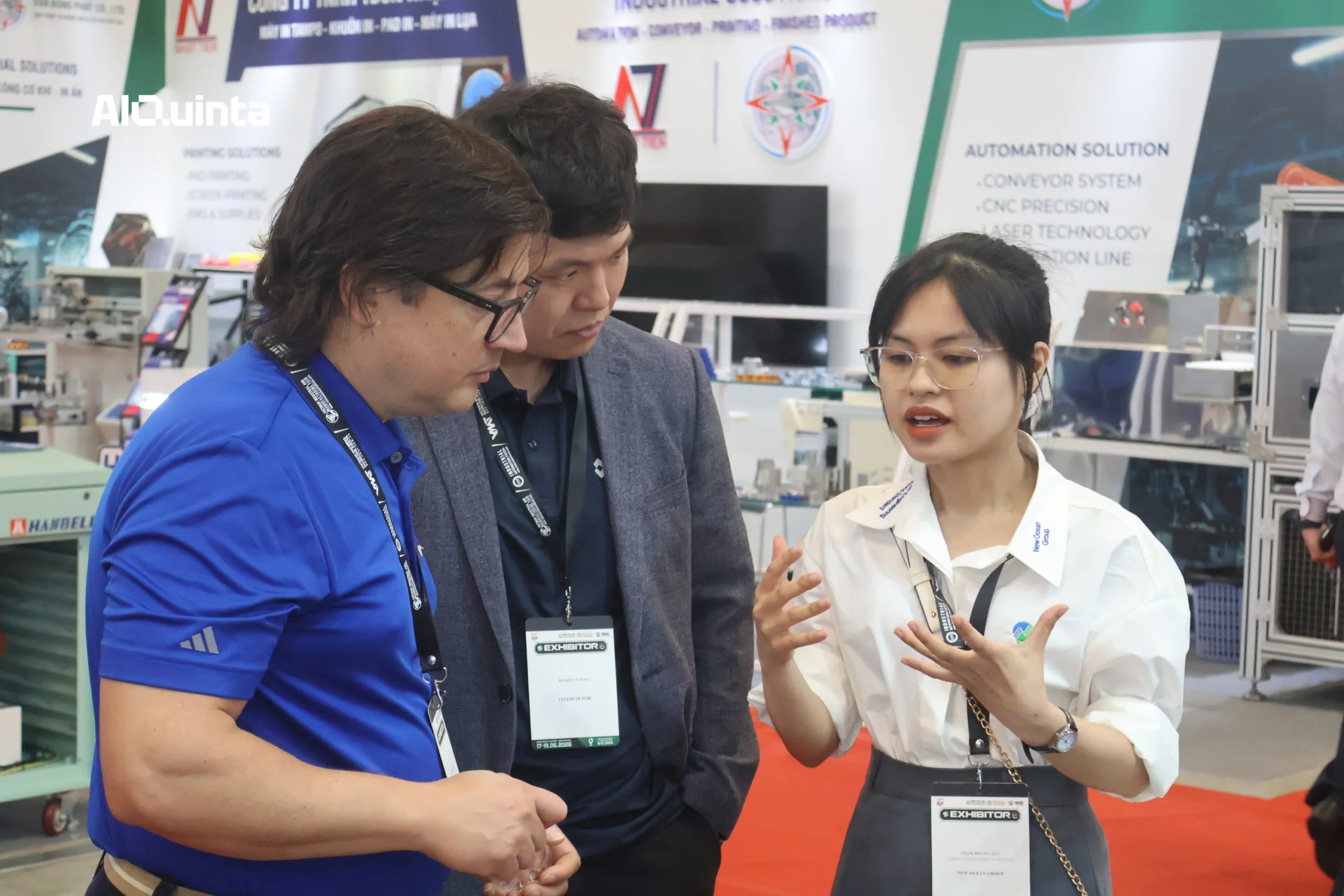
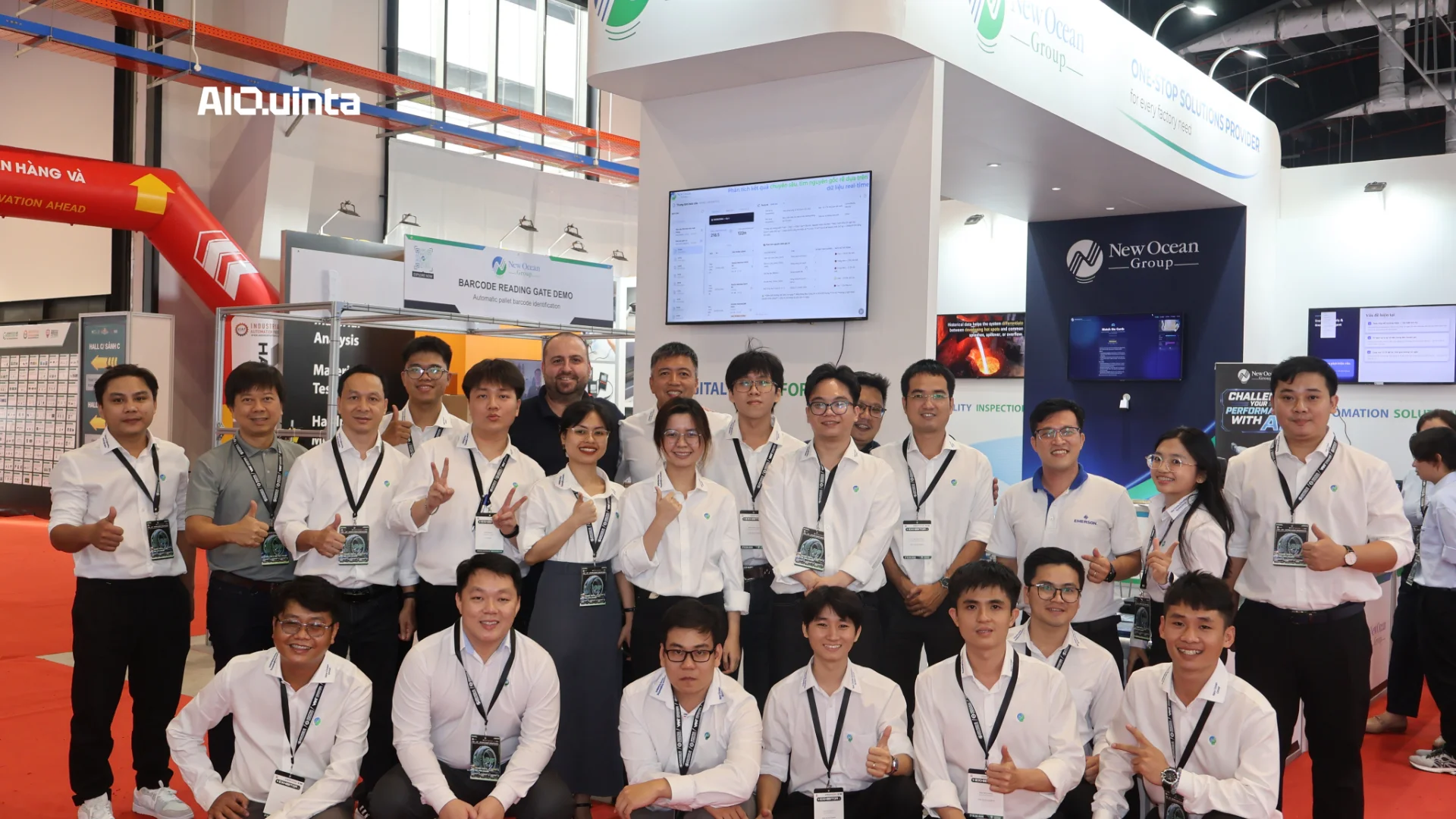
Toggle From 17 to 19 June 2026, AIQuinta joined New Ocean Group at VIMF Binh Duong 2026, held at WTC Expo, Binh Duong, Ho Chi Minh City.
VIMF 2026 brought together manufacturers, technology providers, industrial solution partners, and business leaders who are looking for practical ways to improve factory operations, automation, and digital transformation.
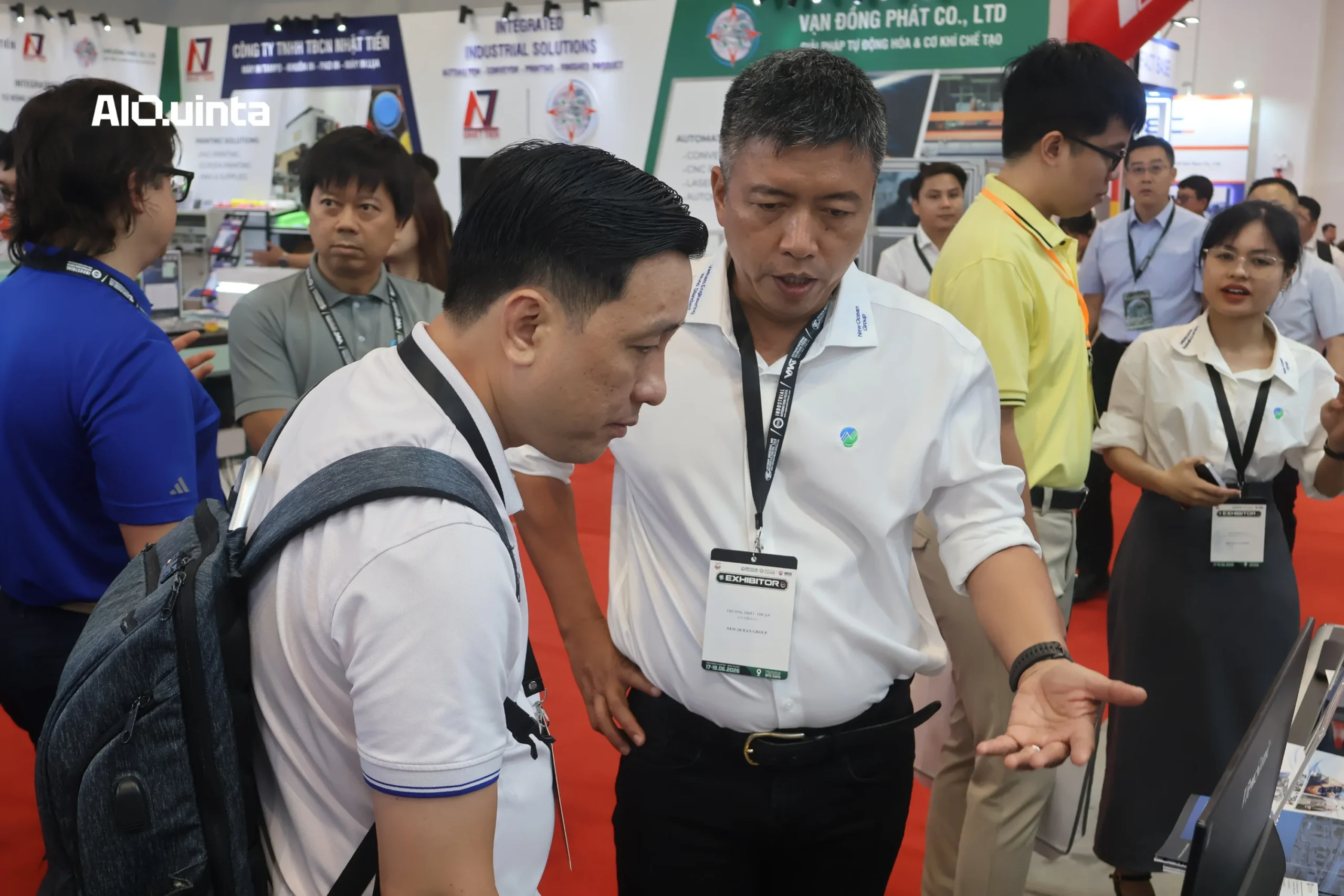
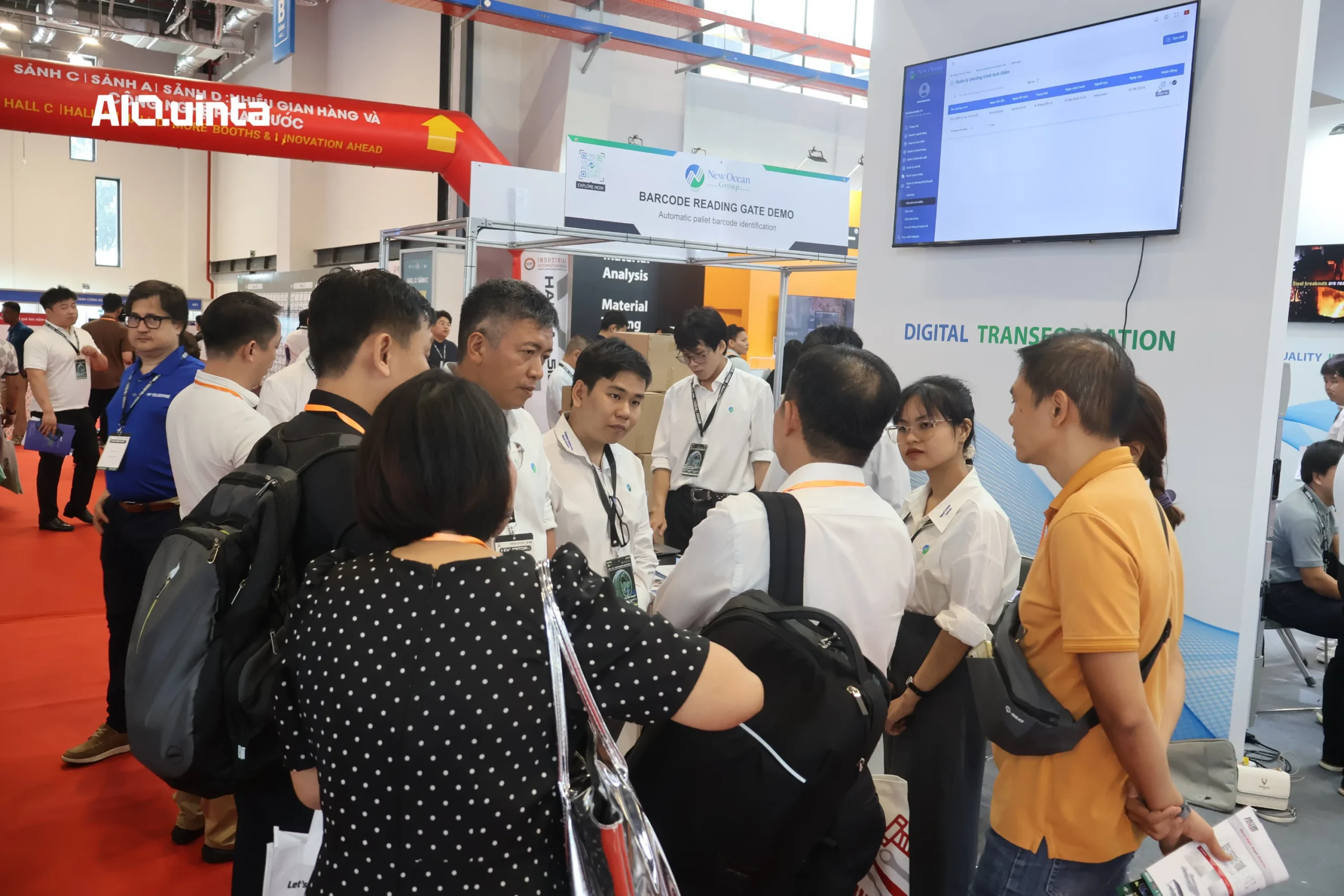
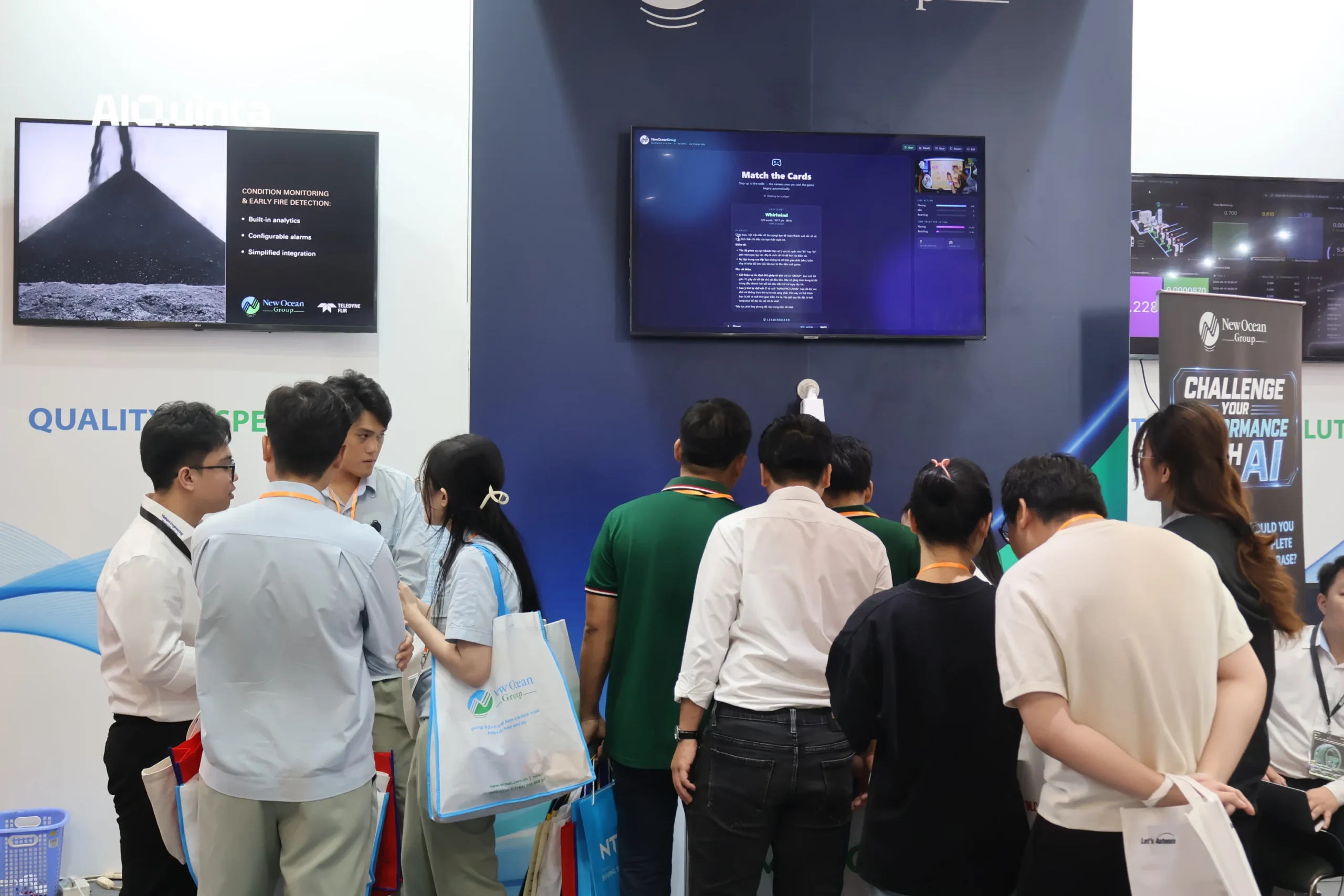
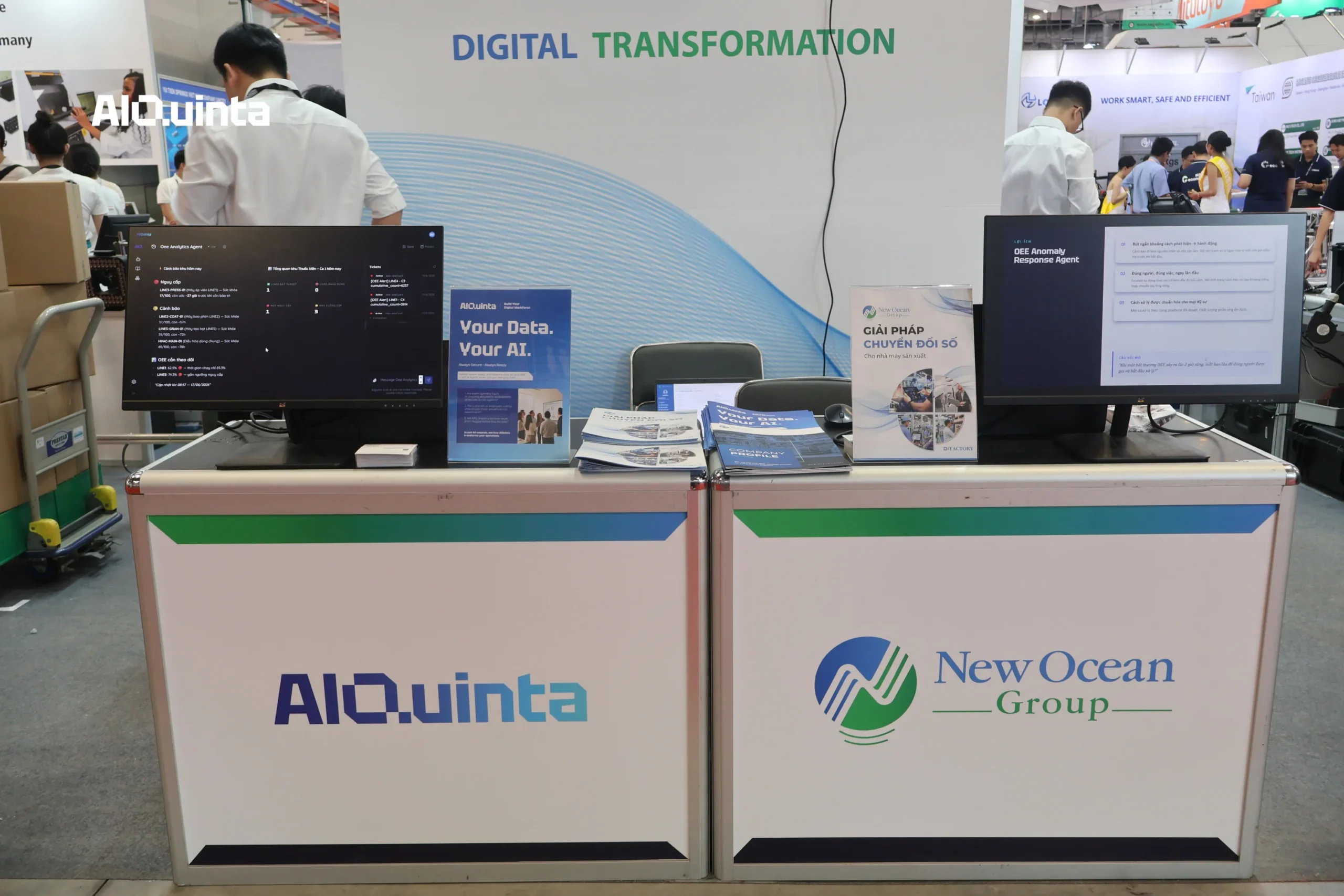
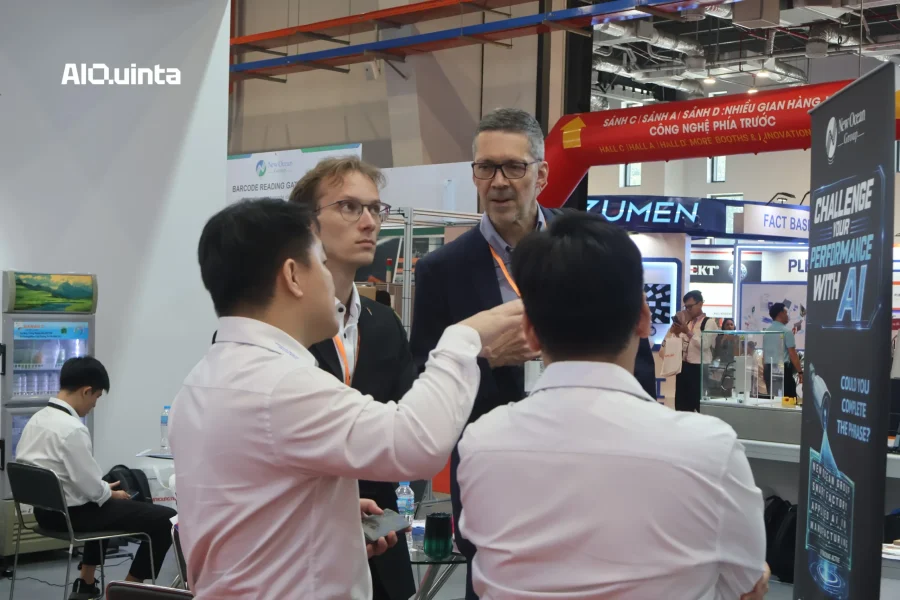
At Booth 84 – Hall B, AIQuinta presented live AI Agent demonstrations focused on real enterprise workflows. The goal was not to show AI as a general chatbot. The goal was to show how AI Agents can connect enterprise knowledge, operational data, and business logic to support faster decisions and better execution.
Across three days, visitors explored how AIQuinta can support manufacturing and enterprise teams in areas such as solution consultation, factory operations, production planning, and logistics knowledge search.
Manufacturing companies are under pressure to improve speed, visibility, quality, and cost control. Many have already invested in automation systems, ERP platforms, production management tools, warehouse systems, and reporting dashboards.
However, many operational teams still face the same practical issues:
This is where AI Agents can create value.
An AI Agent is not only a tool that responds to questions. In an enterprise setting, an AI Agent can understand context, retrieve knowledge, follow a business workflow, connect with systems, and support task execution.
For manufacturers, this matters because factory operations are not only data-heavy. They are also coordination-heavy, knowledge-heavy, and time-sensitive.
AI becomes useful when it helps teams move from searching to acting.
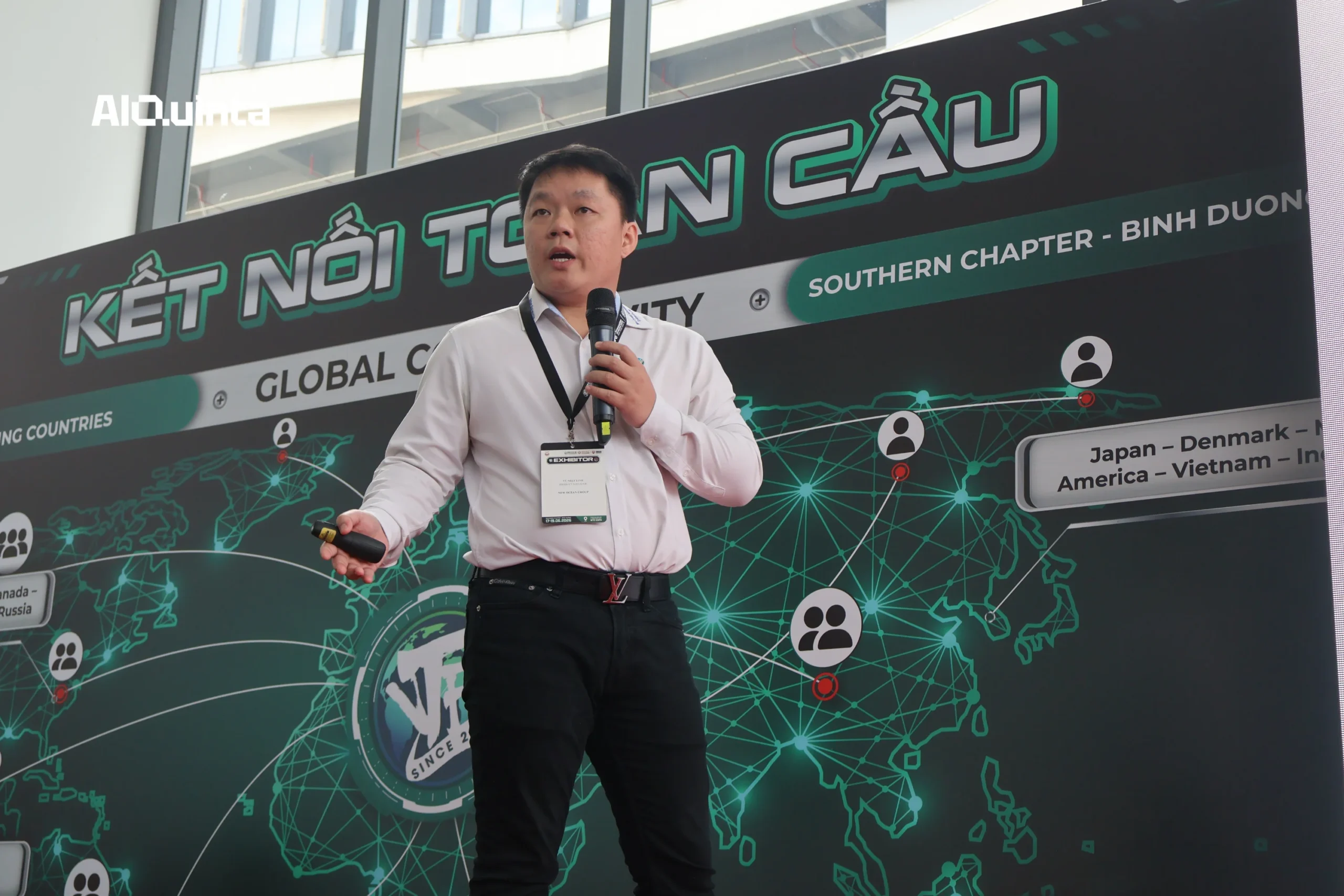
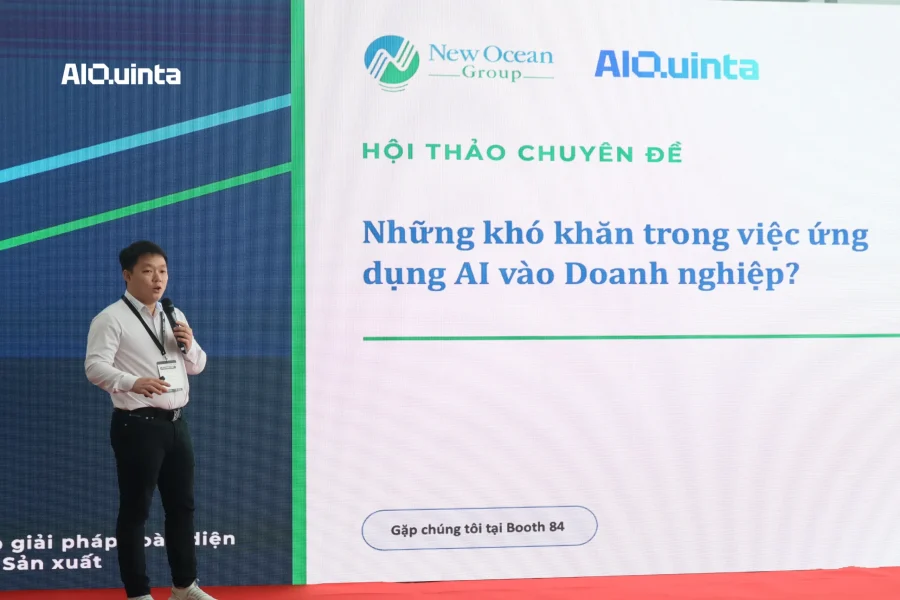
As part of the VIMF Binh Duong 2026 conference program, New Ocean Group hosted the session “Why Factories Are Not Yet Ready for AI: 3 Obstacles to Overcome,” presented by Mr. Vu Nhat Linh from the Sales Department of New Ocean Group.
The session focused on a critical point for manufacturers: AI adoption does not begin with AI tools. It begins with operational readiness. Before AI can create real business value, factories need standardized data, connected systems, clear processes, and a practical roadmap for implementation.
Mr. Vu Nhat Linh shared insights on the key barriers that often slow down AI adoption in manufacturing, including fragmented data, disconnected factory systems, and unclear implementation priorities. He also discussed the factory digitalization journey based on the ISA-95 model, helping manufacturers understand how to move from basic data collection to more advanced AI-enabled operations.
The session gave visitors a clearer view of what needs to be prepared before deploying AI in the factory. Instead of treating AI as a stand-alone technology, manufacturers need to build the right digital foundation so AI can support planning, monitoring, decision-making, and continuous improvement.
For AIQuinta, this message strongly aligns with its approach to enterprise AI: practical AI must be connected to real workflows, trusted knowledge, and operational systems. When the foundation is ready, AI Agents can move beyond simple question-answering and become useful tools for daily business execution.
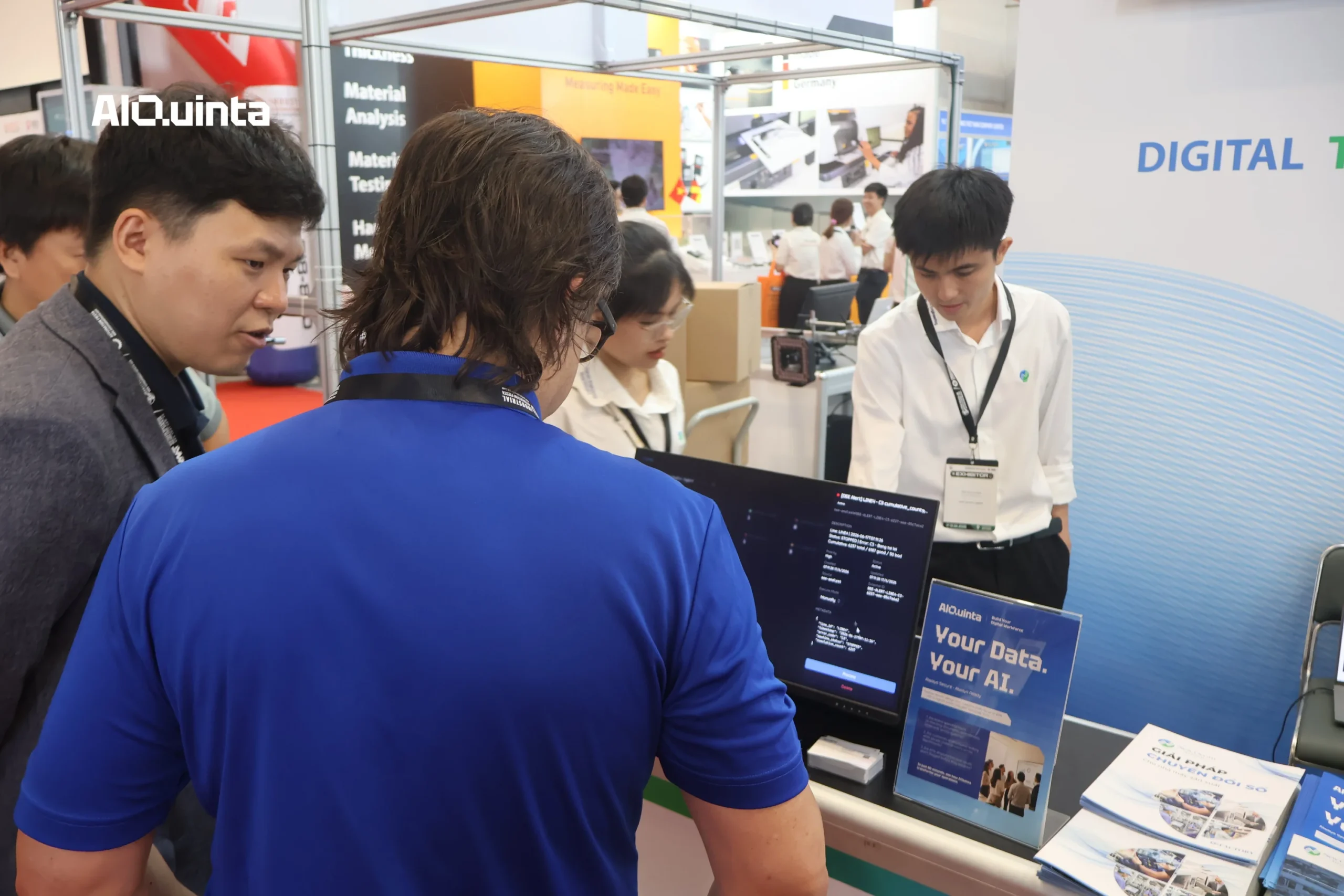
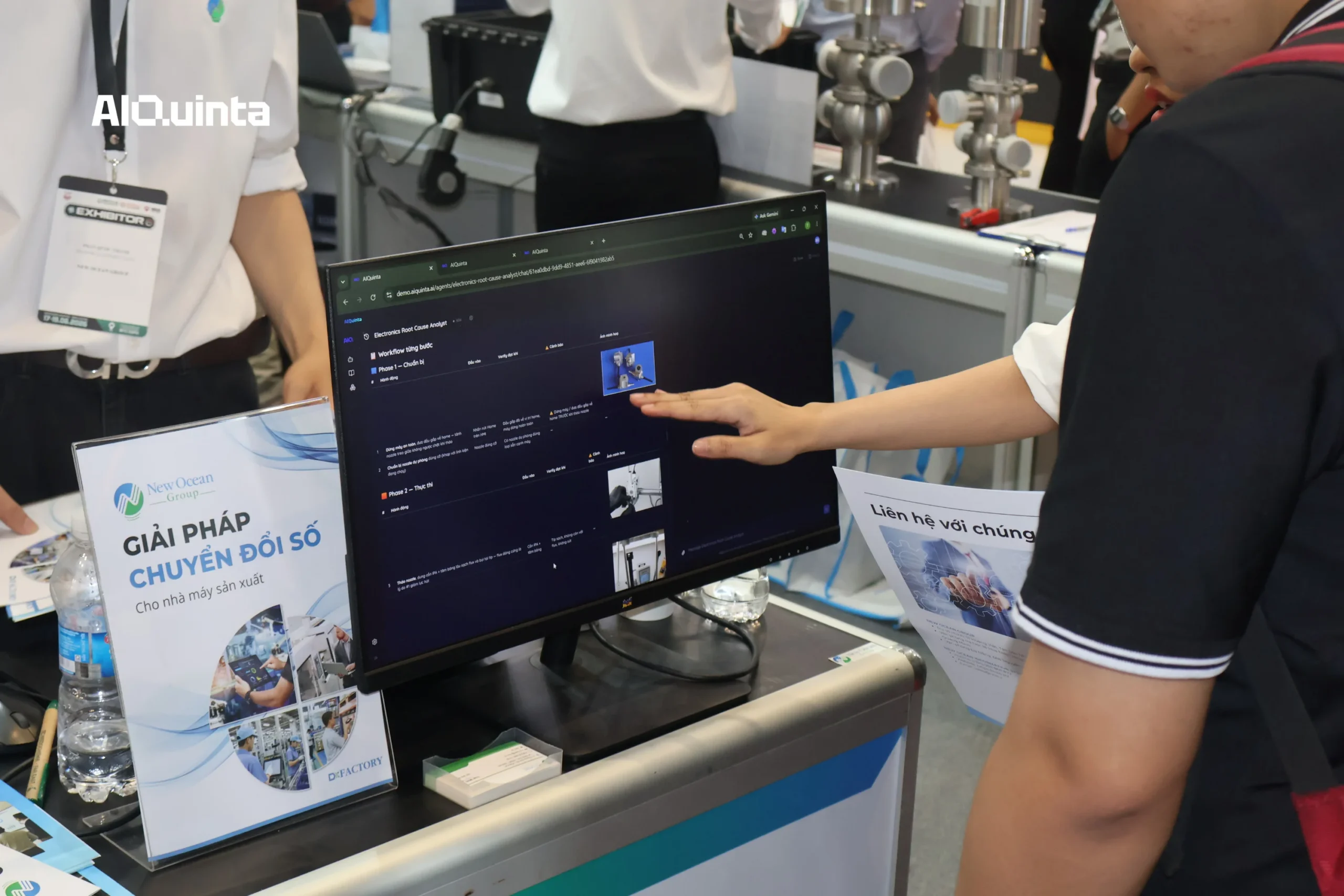
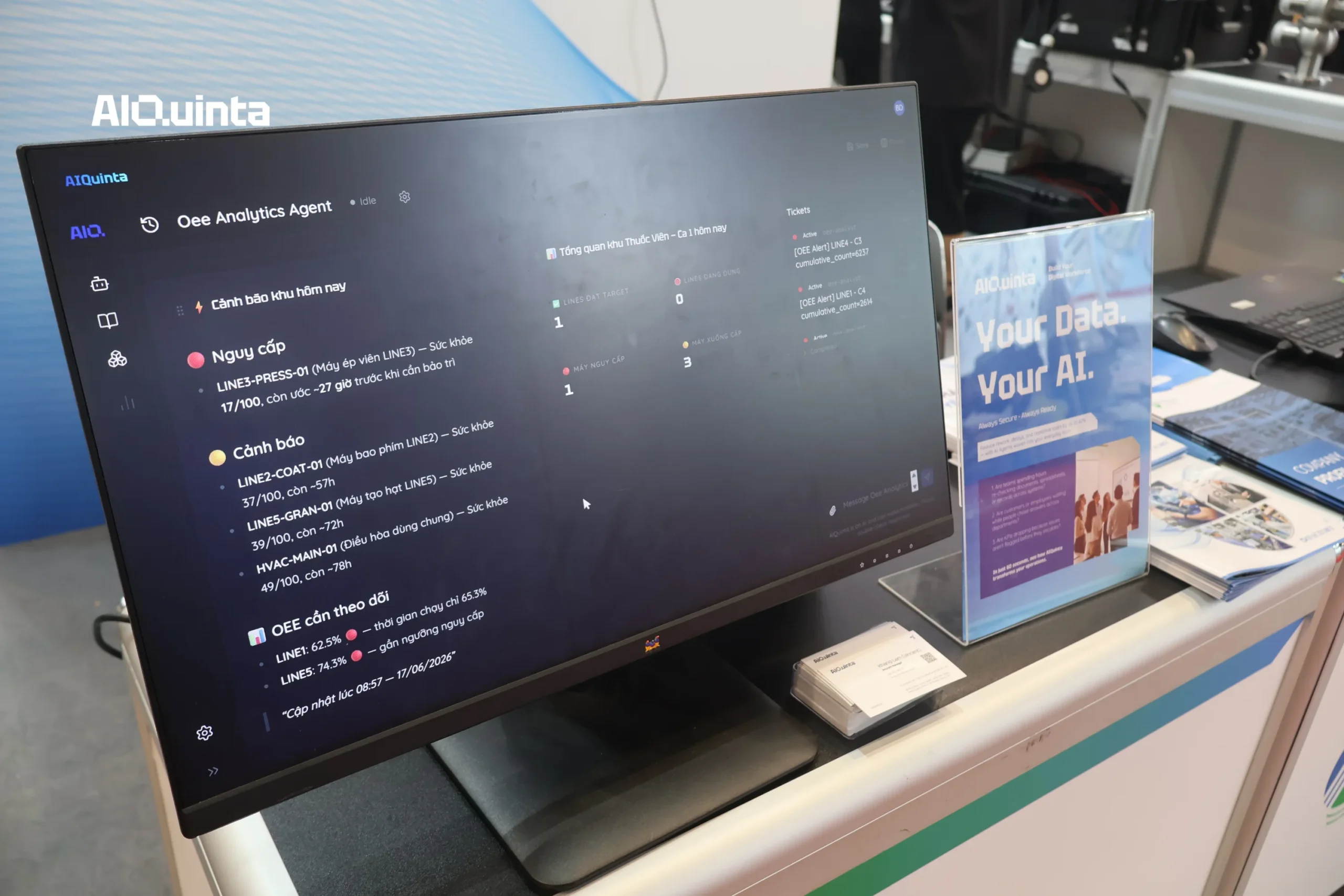
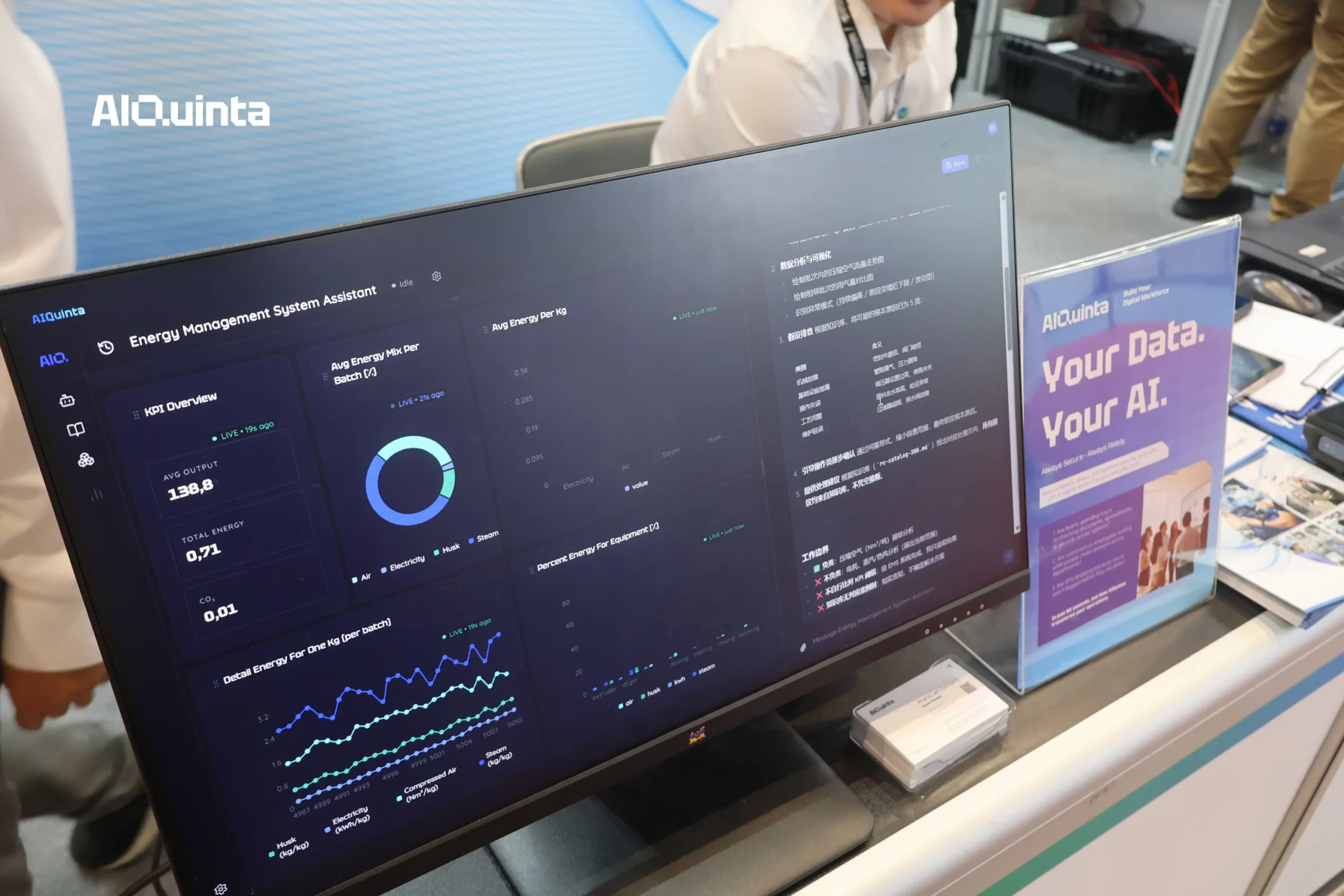
At Booth 84 – Hall B, AIQuinta introduced four live AI Agent demos designed around real enterprise and manufacturing needs.
The demo showcase included:
Each demo represented a different layer of enterprise AI adoption, from front-line consultation to production support and knowledge retrieval.
The common theme was simple: AI Agents become valuable when they are mapped to real jobs.
The first demo featured an AI Consultation Agent for booth visitor engagement.
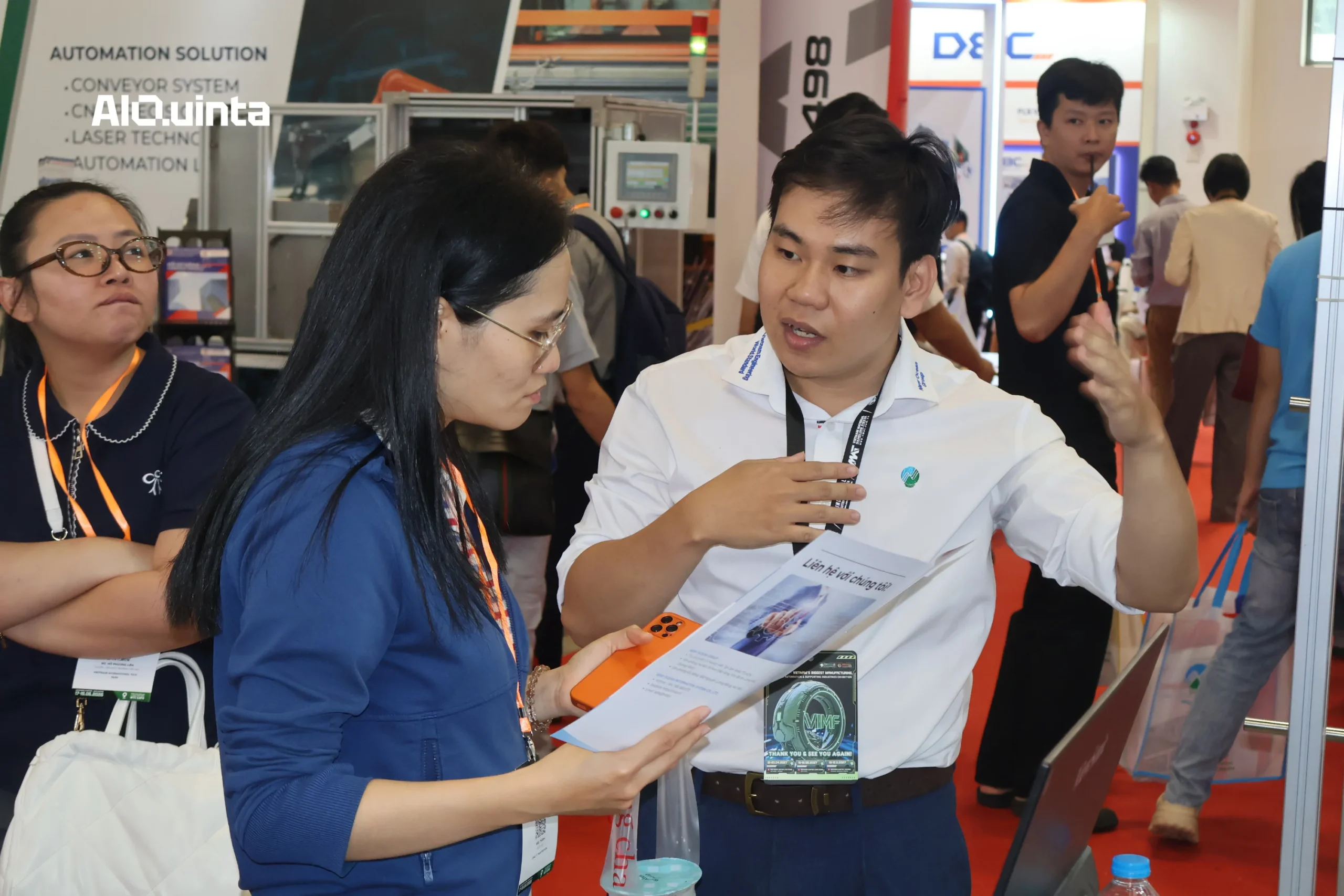
Visitors came from different industries and had different needs, from digital transformation questions to specific factory challenges. The Agent helped collect requirements, identify pain points, and suggest suitable solution directions.
For example, when visitors mentioned issues such as manual production planning, disconnected data, or maintenance delays, the Agent helped structure the discussion and guide next steps.
Beyond exhibitions, this type of Agent can support sales, consulting, customer service, and business analysis teams by making requirement gathering more consistent and efficient.
Its value lies in faster responses, better qualification, and clearer problem understanding.
The second demo showed how an AI Agent can connect with DxFACTORY to support factory operations.
Manufacturing teams often need quick answers about production status, operational issues, workflows, and system information. In many factories, this information is scattered across multiple systems and reports.
The demo showed how AI can help teams access knowledge faster, handle issues more efficiently, and bridge the gap between data and action.
Rather than replacing production teams, the Agent helps them understand context, retrieve information, and respond more quickly.
The third demo focused on production planning support through a Site Agent connected with DxMPM.
Production planning involves balancing work orders, capacity, materials, machines, labor, and schedules. Many companies still rely heavily on manual coordination and spreadsheets.
The demo showed how an AI Agent can assist with production plan coordination and work order creation.
Instead of only searching for information, users can work with the Agent to prepare, validate, and coordinate planning tasks more efficiently.
This helps reduce repetitive work and improve daily operational productivity.
The fourth demo focused on logistics knowledge search.
Logistics teams frequently need information about HS codes, tax codes, customs procedures, and compliance requirements. Finding the right information can be time-consuming.
The Logistics Knowledge Agent helps users quickly access relevant logistics and customs knowledge.
Instead of searching through documents or relying on repeated manual guidance, teams can interact with the Agent to find accurate information faster.
This demonstrates how AI can improve knowledge access and reduce friction in everyday work.
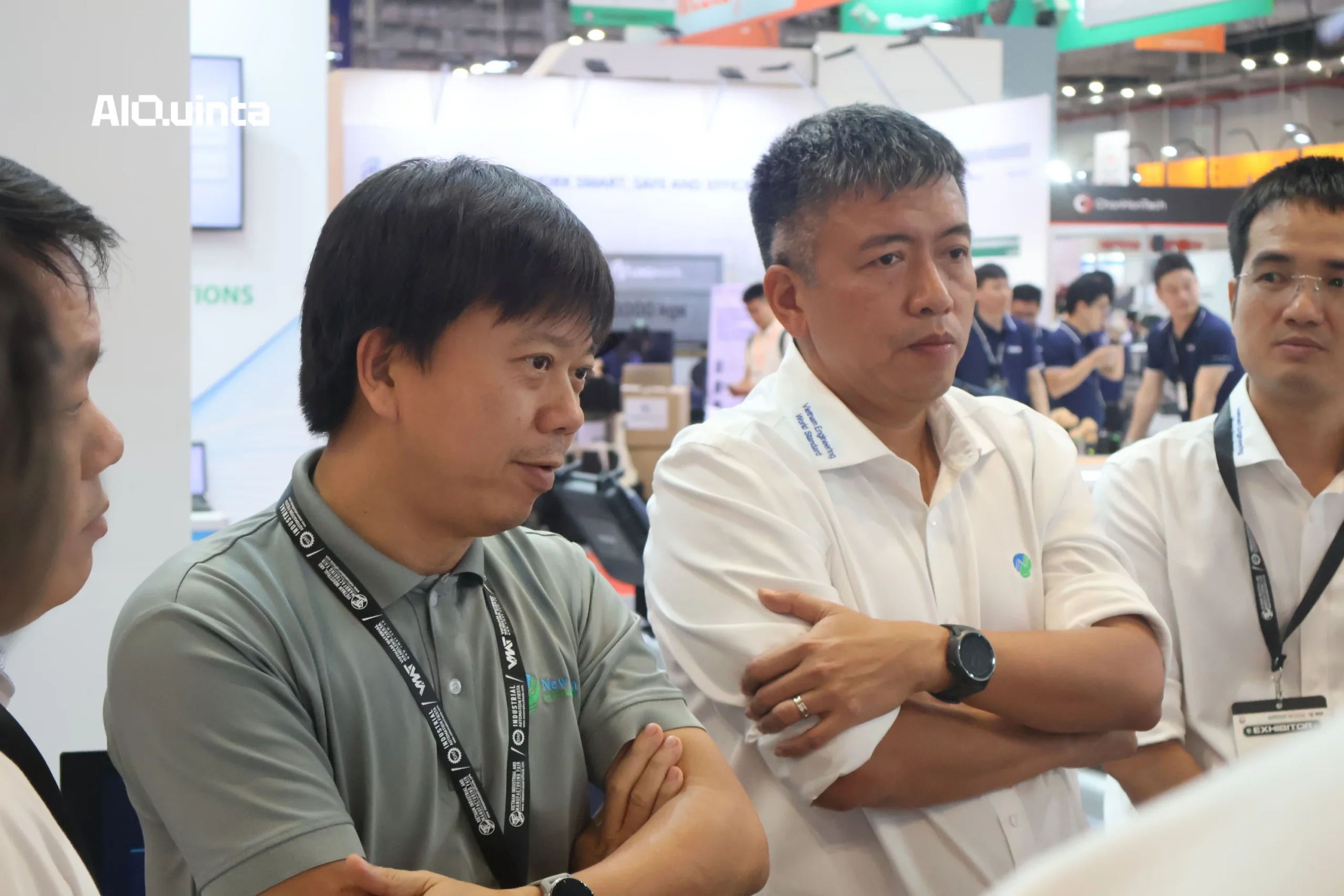
During VIMF 2026, many conversations at the AIQuinta demo area focused on practical AI adoption.
Visitors were not only interested in AI as a concept. They wanted to understand how AI could work inside real business environments.
Common discussion topics included:
These conversations showed that the market is shifting.
Enterprise leaders are moving from asking “What can AI do?” to asking “Where can AI create operational value?”
That shift is important.
AI adoption is no longer only about experimentation. It is becoming an operating model decision.
1. AI must be connected to business context
AI Agents need access to the right knowledge, data, and workflow logic. Without context, AI remains generic. With context, AI can support real business tasks.
2. Manufacturing AI must solve operational pain points
Manufacturers need AI that helps with practical issues such as planning, monitoring, troubleshooting, knowledge retrieval, quality control, and decision support.
3. Enterprise knowledge is a strategic foundation
Documents, SOPs, manuals, technical knowledge, process rules, and expert experience are critical assets. AI adoption becomes more effective when this knowledge is structured and accessible.
4. AI Agents should support action, not only answers
The next stage of enterprise AI is not only question-answering. It is workflow support, task coordination, decision assistance, and system-connected execution.
5. AI adoption should start with focused use cases
Not every process needs AI at the beginning. Enterprises should start with use cases where AI can reduce manual effort, improve speed, increase consistency, or support better decisions.
For AIQuinta, the future of enterprise AI is not about adding AI as a separate layer outside the business.
The future is about embedding AI into the way teams work.
This means AI must understand internal knowledge. It must connect with systems. It must follow business logic. It must support people inside real workflows.
In manufacturing, this is critical because operations are complex. A factory cannot rely on generic answers. It needs context-aware support that reflects the actual production environment.
AIQuinta helps enterprises build this foundation through AI Agents that can connect knowledge, workflows, and operational data.
This is the direction of actionable AI: AI that helps people act faster, not just read more information.
VIMF Binh Duong 2026 was an important opportunity for AIQuinta to showcase how AI Agents can support manufacturing and enterprise operations in practical ways.
Together with New Ocean Group at Booth 84 – Hall B, AIQuinta demonstrated four AI Agent use cases across consultation, connected factory operations, production planning, and logistics knowledge search.
The key message from the event is clear: enterprise AI must move closer to real work.
For manufacturers, AI will create the most value when it supports the daily decisions, workflows, and knowledge needs that shape operations.
AIQuinta would like to thank New Ocean Group, DxFACTORY, all partners, visitors, and manufacturing leaders who joined the conversations at VIMF 2026.
As enterprise AI adoption continues to grow, the priority is no longer only to test AI. The priority is to make AI useful, connected, and operational.