



 Duc Nguyen (Dwight)
CES 2026 Insights, Physical AI & Agentic AI are reshaping manufacturing. Discover 4 key trends and how to prepare your factory’s data infrastructure today.
Table of Contents
Toggle Rise of Agentic AI: The industry is witnessing a shift toward Physical and Agentic AI, where machines evolve from passive tools into autonomous agents capable of making real-time decisions.
Converging IT and OT: To escape “Pilot Purgatory” and scale successfully, manufacturers must bridge the disconnect between Information Technology (IT) and Operational Technology (OT).
The “Hard Tech” Ecosystem: AI requires a robust physical infrastructure to function, relying on an ecosystem of Digital Twins, 5G connectivity, and smart maintenance technologies.
Empowering “New Collar” Workers: Technology is being used to solve labor shortages by upgrading human capabilities, creating a new generation of tech-savvy “New Collar” workers.
If 2024-2025 was the year the world gasped at Generative AI’s ability to write code and poetry, CES 2026 has delivered a far more tangible message to the industrial world: AI has moved beyond the screen.
The consensus from global tech leaders at the most powerful tech event in the world is clear: We are entering the era of Physical AI. Artificial Intelligence is no longer just cloud-based logic; it is now embedded in robots, sensors, and assembly lines, capable of sensing, acting, and reacting to the physical world in real-time.
For manufacturing leaders, this signals a critical pivot point. The question is no longer if you should automate, but how you prepare your data infrastructure to support this new wave of intelligence.
Based on key sessions from CES 2026, here are the four strategic insights defining the future of the factory floor.
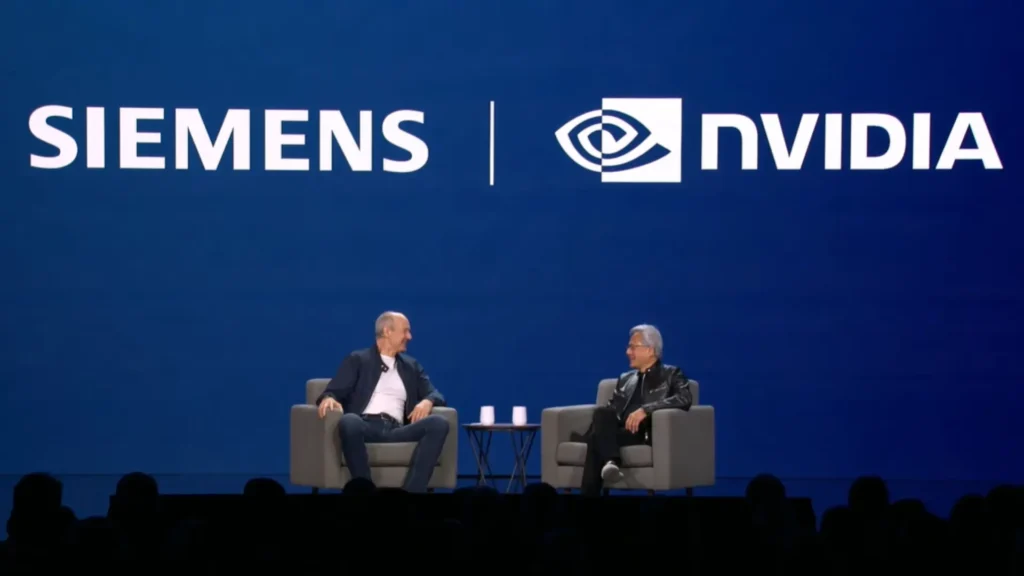
In the opening session, “CTA State of the Industry Address and Siemens Keynote” – CES 2026, the buzzword was Agentic AI.
This represents the next evolutionary step in automation:
Traditional Automation: A robot repeats a programmed task. If a part is misaligned, the robot fails.
Agentic AI: The machine possesses “contextual awareness.” It detects the misalignment, autonomously adjusts its grip, and corrects the error without human intervention.
The Insight: We are moving from tools that wait for commands to agents that make decisions. For manufacturers, this means production planning can soon become dynamic, with systems self-adjusting to rush orders or material shortages in real-time.
Why do 70% of smart enterprises initiatives fail to scale? The session “Powering Manufacturing Transformation with AI Partnerships, presented by EY” – CES 2026, hit the nail on the head: The disconnect between IT and OT.
Factories often operate as data silos:
IT (Information Technology): ERPs and financial data in the office.
OT (Operational Technology): PLCs and sensor data on the shop floor.
The Insight: To escape “Pilot Purgatory”, enterprises must build a Data Fabric that unifies these two worlds. Data must flow seamlessly from the sales order (IT) down to the machine execution (OT) and back again. Without this convergence, AI remains a toy, not a tool for scale.
AI is the “brain,” but a factory needs a healthy “body” and a fast “nervous system.” The session “Beyond AI: The Technologies Powering the Future of Manufacturing” – CES 2026, highlighted the critical hardware ecosystem.
Industrial Metaverse & Digital Twins: Before modifying a physical line, engineers can run thousands of simulations in a digital twin to identify bottlenecks.
Prescriptive Maintenance: Moving beyond predicting failure, systems now prescribe the fix and auto-schedule the maintenance window to minimize downtime.
The Insight: Software alone cannot save a factory. Investing in “Hard Tech” infrastructure—like Private 5G for low-latency connectivity and sensors for vibration analysis—is the prerequisite for deploying Physical AI.
Technology isn’t replacing people; it’s upgrading them. This was the human-centric message from session “Building Skills & Talent for the Next Era of Manufacturing” from CES 2026.
The industry faces a massive talent gap as Baby Boomers retire and Gen Z avoids traditional “dark, dirty, dangerous” factory jobs. The solution is the New Collar Worker: a hybrid role that combines trade skills with digital literacy.
The Insight: To attract talent, factories must become high-tech environments. By equipping workers with tablets, AR glasses, and AI copilots, manufacturers can gamify operations and reduce the learning curve for new hires.
The future painted at CES 2026 is bright, but it requires a pragmatic approach. You cannot deploy Agentic AI or Digital Twins on top of messy, fragmented data.
For enterprise leaders, the immediate action item is not to buy more robots, but to audit your data architecture. Is your shop floor talking to your top floor? If not, that is where your transformation must begin.
Ready to build the data foundation for your smart enterprise? Explore how AIQuinta helps.






A chatbot to answer your questions based on AIQuinta's published insights & enterprise knowledge
This is a Gen AI system. Responses are based on AIQuinta insights and should be verified.